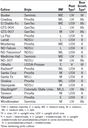
The 2019 dry bean grower survey is the annual survey of varieties grown, pest problems, pesticide use and grower practices of the Northarvest Bean Growers Association, an association of dry edible bean growers in Minnesota and North Dakota.
The 2020 dry bean survey is the 31st annual survey of varieties grown, pest problems (insect pests, diseases, weeds), pesticide use, agronomic practices and pest management practices of dry edible bean growers in Minnesota and North Dakota. The survey is supported by the Northarvest Dry Bean Growers Association.
The production guide will provide useful information to assist you in making timely management decisions.
This publication includes photos of all North Dakota state and county listed noxious weeds as well as "troublesome" plants such as poison ivy. Methods to identify and control each weed are discussed and why the plant is a concern in the state is explained. This is a pocket sized version of the publications W1411, Identification and Control of Invasive and Troublesome Weeds in North Dakota.
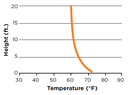
Spray drift from temperature inversions is a major problem for pesticide applicators. This publication is written to help them decide if a spray application should be made or if there is significant potential for spray drift to occur.
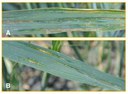
Provides general disease and management information on bacterial leaf streak of wheat. This foliar disease has increased in prevalence over the past five years resulting in yield loss.
This publication summarizes the life cycle, crop damage, and distribution of the banded sunflower moth. It explains monitoring and estimating damage potential, pheromone traps, chemical control and application timing, cultural control, biological control and host plant resistance.
The basics of corn production in North Dakota provides information about corn production in the state. It addresses topics from abiotic stresses, soil fertility management, weed and insect control, diseases, as well as harvesting and storing corn.
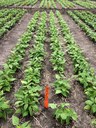
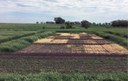
NDSU research trials evaluate potential yield increase of black and navy bean with higher plant populations and narrower rows compared to the traditionally recommended plant density in wide rows.
This publication talks about growing buckwheat in North Dakota, from the adaption, rotation, variety selection and seeding to fertilizing, harvesting and marketing the crop. It also includes information on pests, weed control, and the average yield from different locations across the state.
Importance, cause, signs and symptoms, disease cycle and management strategies for clubroot of canola
Information regarding the cause, symptoms and signs and management of the economically important disease of canola, Sclerotinia stem rot (white mold).
At times, potato growers may experience poor emergence of potato plants. There are number of reasons why potato plants may not emerge properly. This article is intended to provide a list of common problems that can cause poor potato emergence and stand. Utilizing this list can help growers more rapidly identify the cause and improve management of the crop and subsequent crops.
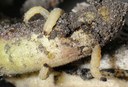
This publication describes the common arthropod pests of corn in North Dakota. The following pests are included: northern and western corn rootworms, cutworms, European corn borers, grasshoppers, corn aphids, seed corn maggots, spider mites and white grubs (June beetles). To help pest managers with proper identification, a brief description and photograph of the immature and adult life stages is provided for each pest.
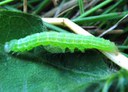
This publication describes the common arthropod pests of soybean in North Dakota. The following pests are included: foliage-feeding caterpillars (green cloverworm, painted lady butterfly), potato leafhoppers, soybean aphids, spider mites, armyworms, bean leaf beetles and cutworms. To help pest managers with proper identification, a brief description and photograph of the immature and adult life stages is provided for each pest.
This publication describes the most common natural enemies of insect pests that are found in field crops and gardens. Pictures of each natural enemy are provided for assistance with identification. Predators, parasitoids and entomopathogenic fungi and viral diseases are covered.
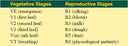
This publication describes key growth stages of corn and provides photos of each. It describes what yield components are affected by management and environmental stress at each stage.
Dry bean is a food crop that requires the producers to provide special cultural management and attention. Proper management is essential from cultivar selection, field selection and planting through harvest, plus marketing for maximum profitability. This guide helps producers meet those production challenges.
This is a much delayed update to the original, which was a North Central Regional Publication 341, but the national AES doesn't support publications anymore, so this will be an NDSU publication. It includes use of low rates of planting time fertilizer with or near the seed, use of foliar fertilizers and approximate elemental composition of many regional crops.
The presence of salts and high water tables in North Dakota soils due to an extended climactic wet cycle recently has stimulated interest in the installation of tile drainage systems. The tile controls the water table and encourages the leaching and removal of salts from the soil above the tile lines. This improves soil productivity, culminating in improved crop yields
The yield-based N rate formula has been terminated. These recommendations have been updated to reflect that yield and N rate are not related between environments. Also, N recommendations for western ND have been modified to incorporate the special requirements for achieving malting grade in that environment.
Producers grow two types of flax: seed flax for the oil in its seed and nutritional value, and fiber flax for the fiber in its stem.
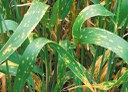
This publication provides information for the identification and management of the common fungal leaf spot diseases found in wheat in North Dakota.
This publication summarizes recommendations for growing rye as a cover crop. It includes guidelines for variety selection, planting date, seeding rate and termination timing the next spring.
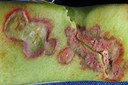
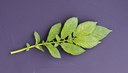
Pictures of herbicide injury in potatoes.
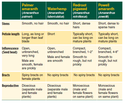
Palmer amaranth and waterhemp are difficult to control pigweeds that are found in North Dakota. This publication focuses on how to identify these species from other pigweeds, and focuses on biology of these weeds that makes them difficulty to control. General management principles are also discussed.
This publication identifies leaf stages in small grains to help with the application of postemergence-applied herbicides. Knowing the leaf stages describes the optimum treatment time that will maximize weed control and minimize crop injury.
This publication summarizes the development of insecticide resistance in soybean aphids in the upper Midwest and how to manage insecticide resistance using an Integrated Pest Management approach.
Saline soils contain salts in great enough abundance that crop yields suffer and sometimes makes successful crop production impossible. This publication talks about testing your soil, salinity management, mapping, crop selection and tile drainage.
The North Dakota Canola Variety Trial Results provide producers with data on canola performance throughout the state and gives information about yield and other agronomic traits, for accurate selection of canola hybrids for agricultural production in North Dakota