Feeds and Feeding
It is recommended that producers need to test their feedstuffs (and possibly water) before they are fed to be safe. If producers want to utilize the NDSU Veterinary Diagnostic Laboratory, call 701-231-7527.
- Ammoniation of Low-Quality Roughages (NDSU Article)
- When good or medium quality hay is not available, livestock producers may consider feeding ammoniated low quality hays or crop residues. Ammoniation can double or triple crude protein levels in crop residues such as straw and corn stalks and increase digestibility 10 to 30 percent, making them equivalent to prairie hay in feed value. Ammoniation can also boost consumption of those feeds by 15 to 20 percent.
- Ammoniating Low Quality Forages (video from K-State)
- Integrating Field Crops and Coproducts into Beef Cow Diets May Help Producers in Drought
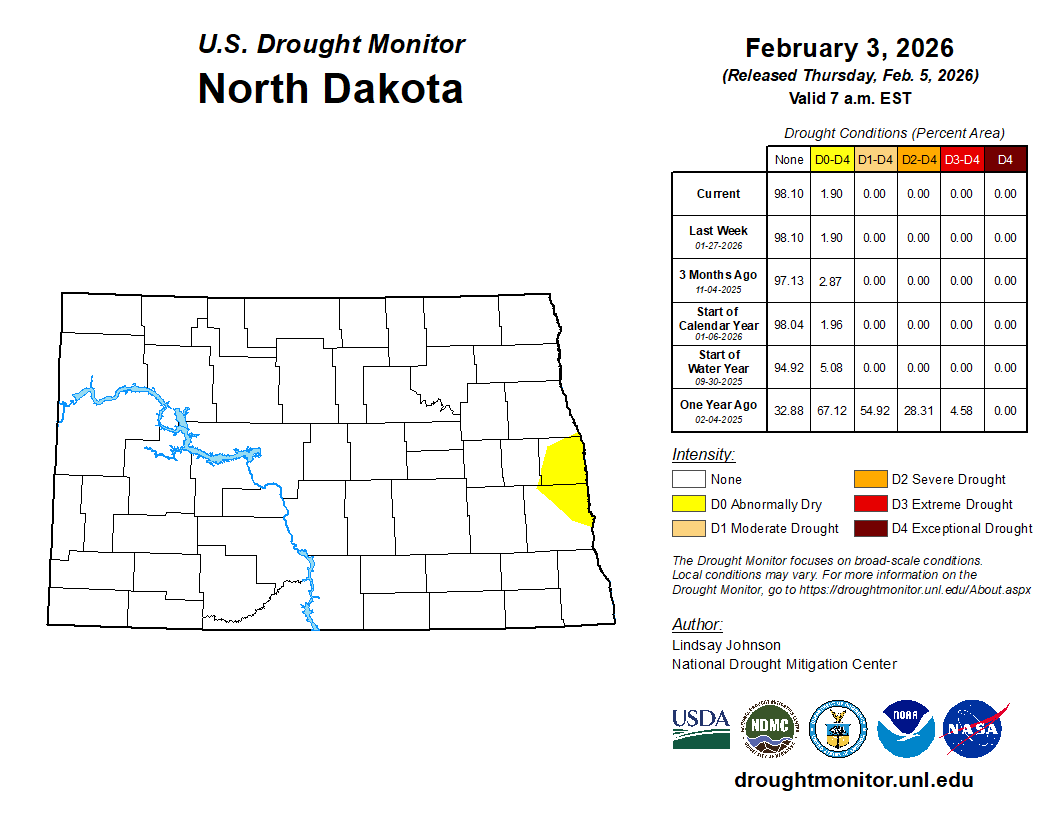
- As drought conditions develop and persist in parts of North Dakota, beef cow producers are looking for feeding options for their herds.
- Supplementing Cattle on Drought-affected Pastures and Ranges
- Cattle producers generally have two main options for meeting the nutrient requirements of cattle on drought affected pastures and ranges. The first is to provide supplemental feed to ensure the cow herd has adequate energy, protein, vitamins, and minerals. The second is to reduce the nutrient requirements of the cow to a point where they can be met with available forage
- Feed Strategies for Certain Purchased Feeds and Feed Additives
- Strategies to economize feed additive use.
- Early Weaning Beef Calves
- Traditionally, calves are weaned at six to seven months of age. In typical spring calving herds in the northern Great Plains, this is usually October or November. However, during drought, forage is generally limiting and early weaning should be considered as a management tool. Time of weaning will have impacts on cow and calf performance as well as health and productivity of the native range or pasture.
- Creep Feeding Calves
- Creep feeding is a means of providing supplemental nutrients to nursing calves, usually in the form of grain, protein supplements, commercial calf creeps, or high quality forages. Calves are usually allowed access through a gate large enough to allow calves to enter but small enough to restrict access by cows. Creeps vary from grains to "creep grazing" high quality forages to limit-fed protein supplements.
- Dairy Feeding During Drought
- Ideal nutrient content of various silages.
- Limiting Forage Intake for Dairy During Drought
- Recommended minimum forage intakes for dairy cattle during drought.
- Use Caution When Feeding Dairy Cattle High Levels of Concentrate
- Ensure forage alternatives are nutritionally balanced.
- Partial List of North Dakota Coproducts, Sources and Prices
- Regional co-product pricing